
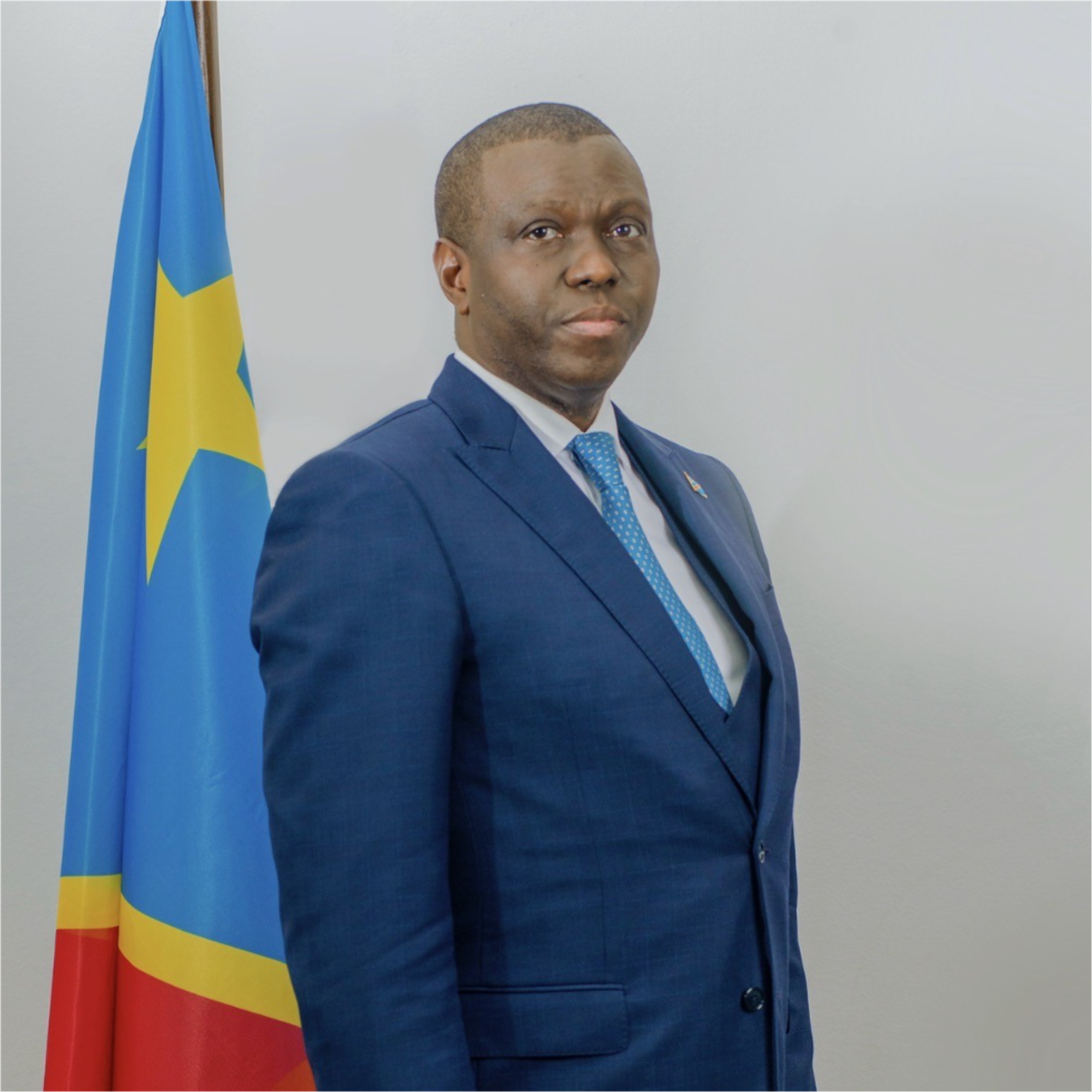
André Wameso Nkualoloki is a Congolese economist, politician, and senior civil servant. He was appointed Governor of the Central Bank of Congo (BCC) on July 23, 2025.
Biography
Education
He holds a degree in business engineering and management, specializing in finance, from the Catholic University of Louvain (Belgium)[1]. He has over twenty-five years of experience in the banking, financial, and institutional sectors in the Democratic Republic of Congo and internationally.
Career
Career in Finance
He has held various strategic roles within leading financial institutions, including: Risk Director at Rawbank (DRC) and Dexia Investment Company (Belgium), Director in the Internal Audit and Validation Control Department at Dexia Group, Head of the Risk Reporting Department at Dexia Holding[2], and Market Risk Analyst at Artesia Banking Corporation.
Political Career
He later joined the Presidency of the Republic, serving as the Presidential Envoy and then as Deputy Chief of Staff in charge of economic and financial issues.
Among the key strategic files he has overseen are: the deep-water port project in Banana, the recovery of oil and mining blocks under the Ventora agreement, the signing of the amendment to the “Chinese Mining Contract” between the DRC and the Chinese Business Group (GEC), the Washington Peace Agreement between the DRC and Rwanda, as well as the ongoing bilateral agreement between the United States and the DRC.
Governor of the Central Bank
On July 23, 2025, he was appointed Governor of the Central Bank of Congo[4], succeeding Malangu Kabedi Mbuyi[5]. He officially took office on August 4, 2025[6].
His Expertise
Expertise in financial risk management (market risk, credit, validation, audit)
In-depth knowledge of complex banking provisions and international financial regulation
Strong skills in managing national economic and budgetary projects
Proven ability to lead institutional reforms
Leadership experience in periods of economic transition or monetary crisis
Ability to strengthen the structural resilience of the BCC (digitalization, monetary sovereignty)
His Objectives for the BCC
Economic and Monetary Sovereignty
Strengthening public trust in the use of the national currency
Reducing dependence on foreign currencies for domestic transactions.
Modernization of the Central Bank
Digitalization of payments and automation of control processes
Effective implementation of the strategic plan.
Inclusive and Social Development
Deployment of local currency mortgage loans to stimulate the real estate sector
Promotion of social protection initiatives (retirement funds, housing, etc.).
Strengthening Official Reserves and Financial Resilience
Diversification of reserves (gold, foreign currency)
Securing assets and improving crisis management of systemic risks.
Bank’s Participation in International Economic and Financial Institutions
Participation in international forums of economic and financial institutions, as well as in regional and sub-regional economic and financial integration processes, particularly in the SADC, EAC, and WAEMU.
Finally
André Wameso represents a new generation of Congolese leaders committed to enhancing the visibility of the DRC both nationally and internationally.